Jan 282025
 

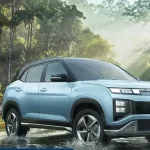
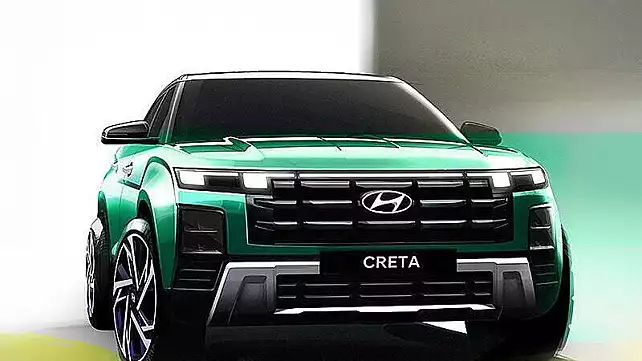
The Hyundai Creta EV is a fully electric compact SUV that seats up to five people. It adopts the same design as the ICE (internal combustion engine) version but includes unique EV elements, such as a redesigned grille and aerodynamically optimized alloy wheels. The Creta EV offers an impressive range of up to 473 km on a full charge.

After its launch at the Bharat Mobility Global Expo 2025, the Hyundai Creta EV has started arriving at dealerships. Prices for the Creta Electric range from Rs 17.99 lakh to Rs 24.37 lakh (introductory, ex-showroom). It is available in four variants: Executive, Smart, Premium, and Excellence.

The Creta EV is packed with tech features, including a 10.25-inch touchscreen, a 10.25-inch all-digital instrument cluster, connected car tech, and dual-zone climate control. It also offers a premium 8-speaker Bose sound system, wireless phone charging, ventilated front seats, and a panoramic sunroof.

For the electric powertrain, the Creta EV comes with two battery options: a 42 kWh pack with an ARAI-rated range of 390 km and a larger 51.4 kWh pack that offers a claimed range of 473 km. The motor generates 135 PS with the standard battery and 171 PS with the larger pack, both delivering 200 Nm of torque.

Charging is quick, with the Creta EV capable of going from 0-80% in just 58 minutes using a DC fast charger. An 11 kW AC charger can fully charge the battery from 10% in around 4 hours.

Safety features in the Creta EV include 6 airbags (standard), Hill Start Assist, a 360-degree camera, Vehicle Stability Control, Tyre Pressure Monitoring System (TPMS), and all-wheel disc brakes. Higher-spec variants come with a Level 2 ADAS safety suite, which adds features like adaptive cruise control and lane-keeping assist.

The Creta Electric is available in 8 monotone and 2 dual-tone color options, including three matte finishes: Abyss Black Pearl, Atlas White, Fiery Red Pearl, Starry Night, Ocean Blue Metallic, Ocean Blue Matte, Titan Grey Matte, and Robust Emerald Matte, as well as Atlas White with a black roof and Ocean Blue Metallic with a black roof.

For those considering a similar-sized electric SUV, the MG ZS EV is a notable competitor, alongside the Maruti Suzuki eVitara, Tata Curvv EV, and Mahindra BE 6.

Jan 282025
 

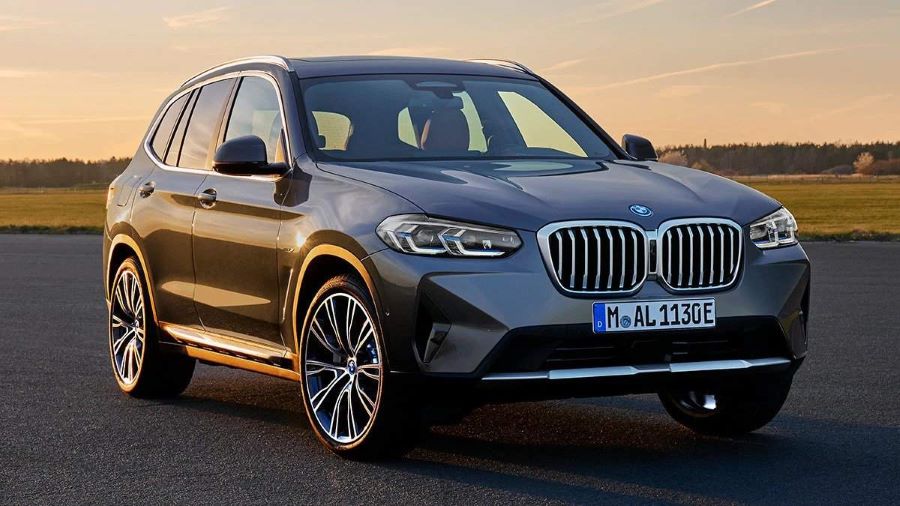
The BMW X3 has officially been launched in India at the Bharat Mobility Global Expo, with bookings now open and deliveries expected to begin in April 2025. The new X3 is priced between Rs 75.80 lakh and Rs 77.80 lakh. This latest model comes with a sleek curved display setup that integrates a 12.3-inch digital driver’s display alongside a 14.9-inch infotainment system. It also boasts features such as a 3-zone climate control system, a powered tailgate, and ambient lighting with a welcome and goodbye animation. Additionally, it is equipped with a heads-up display, a 15-speaker Harman Kardon sound system, ventilated front seats, and heated rear seats, offering both comfort and advanced technology.

The BMW X3 offers two engine options: the 20 xDrive, which is powered by a 2-litre 4-cylinder petrol engine delivering 193 PS and 310 Nm of torque, and the 20d xDrive, featuring a 2-litre 4-cylinder diesel engine with mild-hybrid 48V technology, producing 200 PS and 400 Nm of torque. Both engine variants are paired with an 8-speed torque converter automatic gearbox that directs power to all four wheels for optimal performance.

Safety-wise, the X3 is equipped with a comprehensive suite of advanced driver assistance systems (ADAS), which includes front collision warning, lane change warning, lane departure warning, and park assist with reversing assist as standard. It also features multiple airbags, ABS with EBD, front and rear parking sensors, electronic stability control, and ISOFIX child-seat mounts, ensuring a safe driving experience.

The BMW X3 is set to compete with other luxury SUVs such as the Mercedes-Benz GLC and Audi Q5, positioning itself as a strong contender in the premium SUV market.

Jan 062010
 

All new cars and other trucks are built to congregate a comprehensive set of federal safety regulations. They are built keeping in mind the precautions and the safety measures. But that doesn�t mean that all vehicles are equally safe all the time.

You might wonder when you come to know that the vehicle that you are buying or which you are driving may put you at a greater risk of dying in an accident, according to a study published by the Insurance Institute of Highway Safety, a nonprofit supported by the insurance industry.

People choose small vehicles because they are generally more environmentally friendly, a great value, they provide for greater driving and parking options in congested urban areas, and many consumers tell us they are simply more fun to drive

Why small cars won�t keep you safe?
While our environment is pushing us to make and sell smaller, lighter cars that meet the high fuel economy standards, safety advocates worry that meeting those requirements would result in cars that are less safe in a crash.
The laws of Physics
Size is important because mass, coupled with acceleration, determines the force of a crash. Injuries depend on the forces that act on the occupants in the car, not on how much external damage the car sustains. The force of a crash turns on two key attributes: the weight of the crashing vehicle, which determines how much speed must be absorbed during the impact, and the size of the vehicle, which often determines how close the front of the vehicle is to the driver–an essential indicator of the extent of injuries to the legs and torso.

WordPress › Error

There has been a critical error on this website.

Learn more about troubleshooting WordPress.