Sep 242009
 
driving on rainy days

driving on rainy days

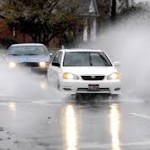
We all may find it difficult to drive a car on a rainy day for sure. And we keep in mind only one thing and that is, safety factor, but may not be considered about fuel efficiency. But there is a simple way to go safe and efficient on a thunder storm rainy day.

Ridge riding is common Hypermiling technique coined by Hypermiling guru Wayne Gerdes. Ridge riding is a simple tip that can aid hyper milers save gas on a rainy day, and stay with increasing fuel efficiency.

Ridge riding is simple and more fun that anyone can follow on a rainy day.

You just need to drive your car on the far right of the road almost over the white line.

Buy doing so you notify two things to the cars behind you

—-that you’re driving at a slow speed

—-Especially helpful when weather conditions add extra danger to being on the road, and more significantly, you keep your car’s tires out of the grooves in the road that develop from heavy travel.

Water puddles develop in the grooves during a storm, and cause drag. By staying on a flat surface and avoiding kicking up water with your tires, you’ll increase your car’s overall MPG. This tip probably won’t save a hypermiler thousands of dollars, but its a safe and easy hypermiling technique to follow on a bad weather condition.
Sep 212009
 
hyprid car

Gliding on air is an adventure and fun too. Surely, you would know how it feels to glide in the sky. Now we are here to know a little on gliding on roads. Of course with your car !� Now to increase your gas mileage we are going to learn another driving tip.

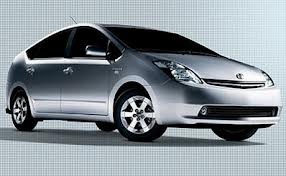
Pulse and glide is a driving technique that is intended to make your driving more fuel efficient. It is most often connected with hybrid cars and cars that have a manual transmission system.

It needs a little bit of practice and the intention to increase the fuel mileage, to learn.

hyprid car

How it works?

Lets assume that you are driving on road and want to attain a speed of 60km/h. Instead of driving steady at 60, now you accelerate to 70km/h (which is the pulse), then use the car to coast for a period in neutral with the engine off down to 50km/h ( glide part ).

Thats all… Repeat the pulse and glide again and again.

Interpretation: If you are pulsing about half of the time then your overall fuel economy will be about twice the number displayed during your pulse. This applies for the instantaneous display.

The other aspect of P&G that experimentation is required by the driver to find how far to glide. At some point the vehicle speed drops to a point where another pulse is needed. By Maximizing the glide you can cut the drag as much as possible to keep the car rolling.

This P&G technique helps to extract every last mile from the fuel drops.

There are 2 keys to get the most of pulse and guide. First, understanding the most efficient operating modes of the car you are driving, which requires some practice, and testing.

Hypermilers typically use a device like the Scan guage to monitor the instantaneous fuel consumption of the vehicle.

So start gliding today but practice before doing so.� To know about more driving and hypermiling techniques read Hypermiling for Efficient Gas Mileage

Sep 212009
 
cycling

I was wondering that there are various techniques available to increase fuel economy. And would like to cite few later starting with the basics now like what are the techniques available and how we can follow them.

Am sure that car lovers would have come across the golden word called Hypermiling. Now for those who are new to the knowledge of fuel economy, this is the right place to start.

Hypermiling is the act of driving using techniques that maximize fuel economy. They exceed manufacturers stated efficiency of their vehicles by modifying their driving habits and techniques. Hypermiling is a great way to save on fuel costs and drive safely.

Those who practice these techniques are referred to as �hypermilers�.

Which is the best vehicle for hypermiling?

The best results are seen in Hybrid vehicles such as the Honda Insight, the Toyota Prius Hybrid and the Honda Civic Hybrid”. Hybrids are especially good as they have a secondary power source.

Hypermiling basics:

—Drive less. Try to use public transport, walking or bicycling.

—Don’t accelerate hardcycling

—Ensure that your tyres are inflated properly. Too much pressure in tyres is dangerous.� Low tyre pressure results more drag and thus less MPG.

—Avoid peak traffic

Avoid driving in traffic for better hypermiling

—Keep a note of your fuel consumption.

—Avoid idling your vehicle. Idling does cause extra wear and tear. Some studies show that idling for just a couple of seconds can burn gas two times as fast as when driving at average speeds. This will mean that you have to pay extra cost on gas for your idling behavior.

—Your route matters. Generally, if you prefer the lightest traveled roads than the busier ones then you are more into employing the fuel saving techniques than when you are struck in the traffic. You cannot hypermile on a short route actually, so driving long with hypermiling technique would actually save you more fuel than over a short busier road.

—Choose the path with minimum stop lights and stop signs.

—Lift your windows up, this would reduce the drag. Closed windows cause drag.

Well , these are few basics on fuel saving techniques, which can be easily followed. Try these out first before start practicing the advanced ones. They are

Pulse and Glide (P&G)

Forced Auto Stop (FAS)

Driving without Brakes (DWB)

Ridge Riding

Driving with Load (DWL)

WordPress › Error

There has been a critical error on this website.

Learn more about troubleshooting WordPress.