Sep 092009
 
ferrari-dino-concept

�The new Ferrari release F450 is ready to be released this october, possibly�at the frankfurt motor show.�It is expected to rock the shows early 2010. It is a sleek sports car. The replacement of F430 is called as Ferrari F450. The Ferrari F430 is a sports car produced by the Italian automaker Ferrari from 2004 to 2009, as a successor to the 360. It debuted at the 2004 Paris Motor Show. Internally, the car is simply known as the “Evo”. This new comer (F450) is also constructed from aluminium and is expected to be lighter than F430. It’ll feature much of the techy parts, including its twin-clutch seven-speed transmission that makes Ferrari to cut CO2 emissions. Ferrari 450 specifications:

  • 4.5 liter V8 engine
  • Excellent handling
  • 10,000+ RPM
  • Enzo inspired design
  • Exterior intake duct work
  • “The mini-Enzo”
  • Top speed monster
  • At least 500 hp
Aug 142009
 
zero pollution air car

zero pollution air car

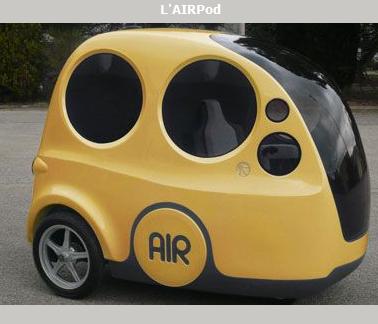
This car is a hybrid which operates on compressed air alone under 35 mph, and uses gasoline to compress more air above 35 mph.

The company claims their air car is “the world�s cleanest car” with “half the CO2 per mile as�a Toyota Prius” at speeds over 35 mph.� However, both of these claims are based on just the gasoline emissions and ignore the emissions associated with compressing the air in the first place.

Over those 848 miles, it’s also accountable for the 22 kWh of energy required replacing the compressed air.�So how much CO2 is associated with that energy?� Well, of course�it depends where you get it from.

According to the EPA, the average CO2 emissions from power production in the US are 1.363 lbs/kWh. So on average, you’re creating 30 lbs of CO2 emissions over those 848 miles, or a further 0.035 lbs/mile for a total of 0.176 lbs/mile of CO2.� This is almost half the CO2 emissions associated with a Toyota Prius.

If the compressed air is powered by a more environmentally friendly energy source, it will produce even lower emissions.� For example, Pacific Gas & Electric (PG&E)�in California produces 0.52 lbs CO2 per kWh, which would bring the ZPM down to 0.155 lbs/mile of CO2.

WordPress › Error

There has been a critical error on this website.

Learn more about troubleshooting WordPress.