Dec 292025
 

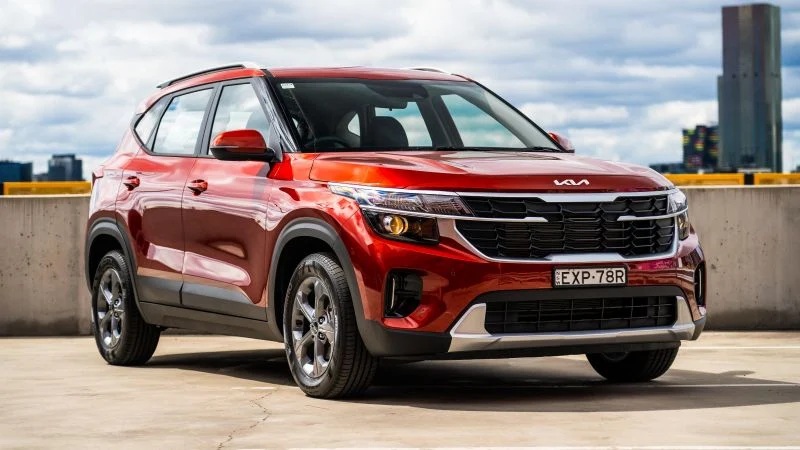
First introduced as Kia’s big India breakthrough on August 22, 2019, the Seltos quickly became the brand’s “category-maker” in the midsize SUV space—an SUV that won buyers by mixing sharp styling, a premium cabin feel, and an engine lineup that could be tailored to calm city commuting or fast highway runs. By 2025, it’s still built around the same winning idea: give customers choice. The current Seltos offers three 1.5-litre powertrains—an efficient naturally aspirated petrol, a punchy turbo-petrol, and a torque-rich diesel—paired with multiple gearboxes depending on the variant. The 1.5 NA petrol makes 115 PS and 144 Nm, the 1.5 diesel puts out 116 PS and 250 Nm, and the 1.5 turbo-petrol delivers a strong 160 PS and 253 Nm, with transmissions spanning manual, CVT/IVT-style automatic, torque-converter automatic, and DCT options across the range.

What keeps the Seltos so easy to live with is that it’s sized “just right” for Indian roads while still feeling like a proper SUV. The 2025 model measures 4,365 mm in length, 1,800 mm in width, and 1,645 mm in height with a 2,610 mm wheelbase, and it backs that up with everyday practicality—433 litres of boot space, 190 mm ground clearance, and a 50-litre fuel tank. Safety and convenience have also been a consistent part of the pitch: Kia’s own brochure highlights 6 airbags, ESC, hill assist, and tech like a 360° camera with Blind View Monitor as part of the Seltos package (variant-dependent for some features).

Now the real escalation begins: Kia has officially moved into the second-generation Seltos era in India, with production started at the Anantapur facility and the SUV built on the newer K3 platform—a full step forward in design, cabin layout, and feature intensity . The new Seltos is locked for an India launch on January 2, 2026, with bookings opened at ₹25,000, and deliveries expected to begin by mid-January. Reports around the reveal describe a noticeably larger footprint—about 4,460 mm long and 1,830 mm wide with a 2,690 mm wheelbase—pushing the stance and interior space further upmarket.

Inside, the next-gen Seltos leans hard into the “premium-tech SUV” identity: media reports highlight a massive 30-inch “Trinity Panoramic Display”, Bose audio, ventilated seats, and an even bigger safety push with Level-2 ADAS said to include 21 autonomous safety features. Importantly, it isn’t abandoning what made it popular—coverage around the India debut says it will continue with petrol, turbo-petrol, and diesel options, keeping the Seltos formula intact while raising the design and technology bar for the segment.

Jun 122025
 

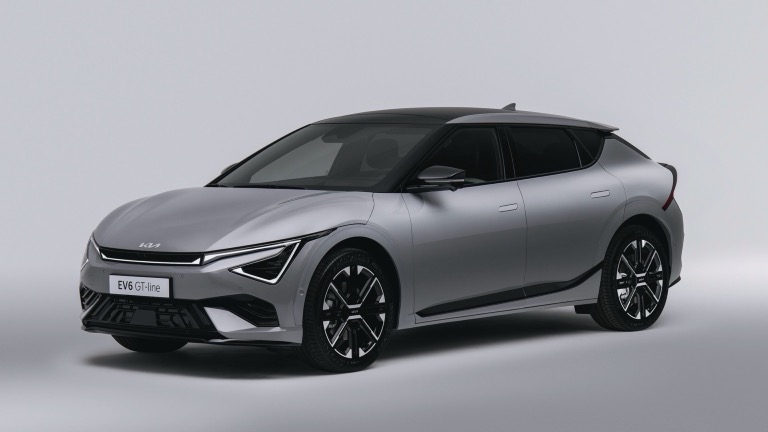
Launched globally in May 2024, the facelifted Kia EV6 marks a bold evolution of Kia’s first dedicated electric vehicle, transitioning into the 2025 model with a host of design, tech, and performance upgrades . At its heart lies an upgraded 84 kWh battery, replacing the old 77.4 kWh pack, paired with Kia’s cutting-edge 800 V E‑GMP architecture, enabling rapid charging—bringing the battery from 10% to 80% in just 18 minutes on a 350 kW charger .

Buyers can choose between two powertrain options: the RWD long‑range variant with a single motor delivering 225 hp and 350 Nm, offering up to 494 km on a full charge; or the spirited AWD GT‑Line, boasting dual motors producing 325 hp and 605 Nm, accelerating from 0–100 km/h in a brisk 5.2 seconds with a real-world range of around 650 km WLTP . An upcoming high-performance GT variant is expected to push power north of 576 hp for supercar-like acceleration .

On the outside, the facelift enhances the EV6’s sleek coupe-inspired stance with refreshed triangular LED DRLs, a revised lower grille, sharper front bumpers, new 19–21″ alloy designs, and blacked-out side cladding on GT-Line trims . Inside, the minimalist, curved twin 12.3″ display now integrates a host of driver amenities: fingerprint authentication, augmented‑reality navigation, digital rearview mirror, head‑up display, wireless Apple CarPlay/Android Auto, and elegant ambient lighting—all underpinned by Kia Connect 2.0’s OTA update capabilities .

Driver confidence and safety are ensured through Level 2 ADAS, including adaptive cruise with lane-centering, forward/rear/side collision avoidance, blind-spot and reverse parking assist, backed by a multi-airbag system (10 globally, 8 in India) and 360° camera support .

Practicality remains a strong suit: the EV6’s 4,695 mm length, 2,900 mm wheelbase, 520 L boot, and 58 L frunk (in RWD variants) make it a capable daily partner . Enhanced ride comfort comes from retuned steering, refined suspension, and improved soundproofing—ideal for long journeys .

In India, the updated GT‑Line AWD was unveiled in March 2025 at ₹65.9 lakh ex-showroom, representing Kia’s highest-value EV yet . From city drives to cross-country touring, the 2025 Kia EV6 blends style, swift charging, intelligent tech, and eco-friendly innovation—setting an exciting benchmark in electric mobility.

Jun 122025
 

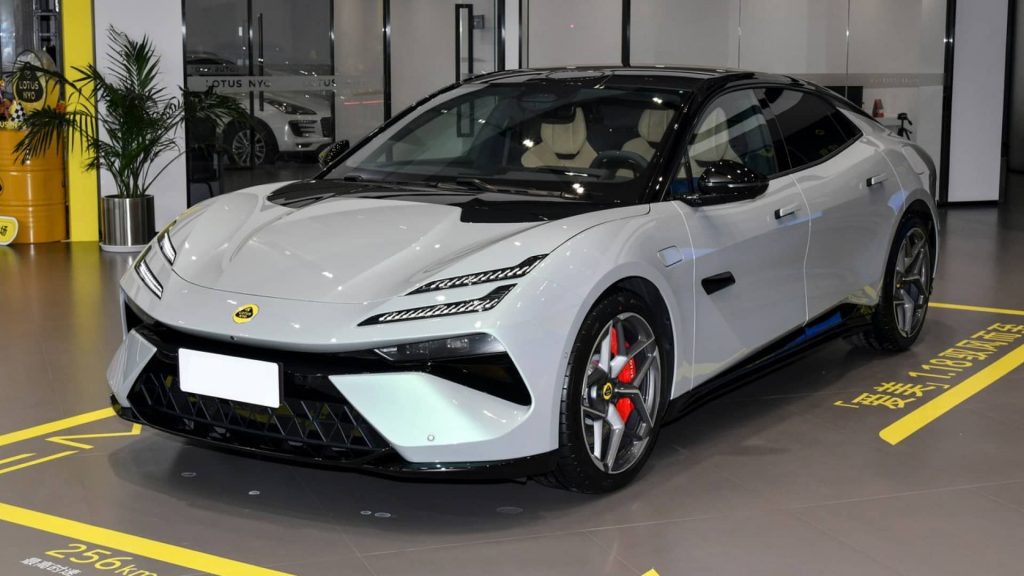
Launched on 7 September 2023, the Lotus Emeya broke cover in New York as the brand’s first all‑electric four‑door “Hyper‑GT,” with production beginning in 2024 and global deliveries rolling into 2025 . Positioned to battle the likes of the Porsche Taycan and Audi e‑tron GT, this sleek liftback channels classic Lotus spirit with a cab‑forward ‘hyperstance’ silhouette, sculptural LED lighting, flush door handles, and active aerodynamics—front grille, rear spoiler, diffuser—generating over 150 kg of downforce while maintaining a drag coefficient as low as 0.21 Cd .

Beneath its striking aluminium and carbon‑accented skin lies a dual‑motor, all‑wheel‑drive setup powered by a 102 kWh battery pack, delivering two compelling performance tiers. The standard 600 and S trims churn out approximately 603 bhp, accelerating from 0‑100 km/h under 4.5 seconds. The flagship R variant unleashes a monstrous 905 bhp, hitting 0‑100 km/h in a blistering 2.8 seconds, electronically limited to around 256 km/h . Lotus’s 800‑volt architecture enables ultra‑fast DC charging: you can ramp from 10 % to 80 % in just 14 minutes via a 350–400 kW charger, and customers report adding roughly 93 miles (150 km) of range in just five minutes .

Inside, the Emeya redefines luxury GT interiors: premium materials like Alcantara, Nappa leather and Wyron sustainable fibers wrap a high‑tech cabin; a bold 15.1″ OLED central screen, optional 55″ augmented‑reality HUD, passenger display, full‑digital instruments, and a premium KEF audio system (upgradable to Dolby Atmos) elevate the experience. Comfort is mission‑critical, with adaptive air suspension, four‑zone climate control, 360° camera, wireless charging and ADAS tech including adaptive cruise, blind‑spot monitoring, and multi‑camera safety systems integrated seamlessly .

In markets like the UAE, pricing begins at AED 439,000 (~₹99.7 lakh), climbing to AED 585,000 for the top R trim . In the UK, it’s priced from £94,950–£129,950, while in India ex‑showroom rates start at ₹2.34 crore, delivering a compelling proposition in the luxury EV segment .

From its 2023 debut to its 2025 on‑road presence, the Lotus Emeya marks a bold transformation—melding electric performance, breathtaking design and supreme luxury into what Lotus prudently terms a “Hyper‑GT.” With 905 bhp, sub‑3‑second sprints, lightning‑fast charging and GT comfort, Emeya stakes its claim as a future classic poised to rival the very best in the electric grand‑tourer realm.

WordPress › Error

There has been a critical error on this website.

Learn more about troubleshooting WordPress.