Jan 292026
 

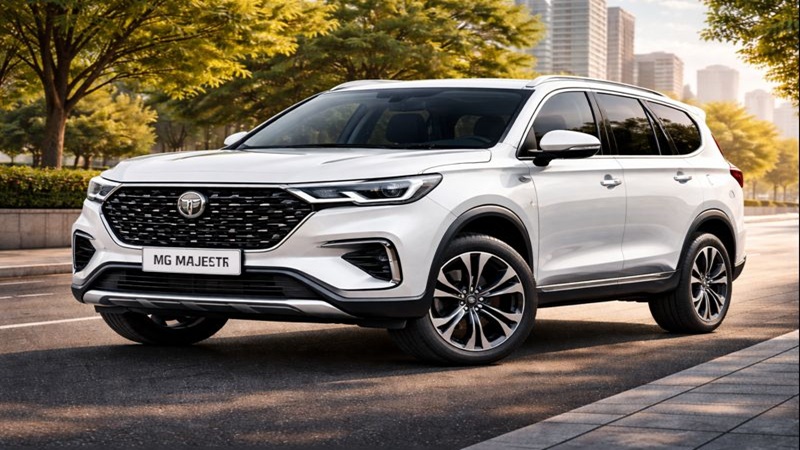
The MG Majestor is an all-new flagship SUV from MG Motor India, scheduled for official launch on February 12, 2026, with teasers already revealing its bold road presence and modern design cues. Positioned above the existing MG Gloster in MG’s lineup, the Majestor is engineered to compete directly with premium body-on-frame SUVs like the Toyota Fortuner Legender and other flagship rivals. This new model is being introduced as India’s first “D+ segment” SUV, which means it’s larger and more premium than typical D-segment SUVs currently on sale, boasting a commanding stance, tallest and widest dimensions in its class, and a distinctive Majestic Matrix front grille with sharp split-headlamps and falcon-type DRLs.

Under the hood, the MG Majestor is expected to be powered by a 2.0-litre four-cylinder diesel engine paired with an 8-speed automatic gearbox, offering robust performance for both on-road and off-road driving. According to reports, the engine’s output is likely around 216 PS of power and up to 480 Nm of torque in the higher tune, with 4×4 drive capability available — making it suitable for rugged terrains as well as highway cruising. This powertrain setup is similar to the internationally sold Maxus D90/Gloster platform, which the Majestor builds upon but with significant design and feature enhancements.

Inside, the Majestor is expected to feature a premium and technology-rich cabin, with a large free-floating 12.3-inch touchscreen infotainment system, an all-digital instrument cluster, a panoramic sunroof, and a suite of advanced comfort features including ventilated/heated seats with massaging functionality, three-zone climate control, and a high-end audio system. Connectivity and convenience will likely be strong points, with Android Auto and Apple CarPlay, wireless charging, and connected car tech anticipated across higher trims. On the safety and driver-assistance front, Level-2 ADAS features such as adaptive cruise control, lane-keep assist, blind-spot monitoring, and a 360° camera setup are expected to be offered, elevating the Majestor’s appeal in the premium SUV segment.

In terms of pricing, the MG Majestor is expected to be priced in a “premium” range, with estimates around ₹40–₹50 lakh (ex-showroom) in India for the base and higher trims, while some publications suggest starting prices could be closer to ₹46 lakh for the initial variants. Final pricing may vary by city and feature level at launch. With its combination of commanding dimensions, powerful diesel engine, advanced tech and safety suite, and luxurious interior features, the MG Majestor is being positioned as a serious challenger in India’s full-size SUV market — appealing to buyers who want more space, capability, and premium features than typical mid-size SUVs.

Jan 292026
 

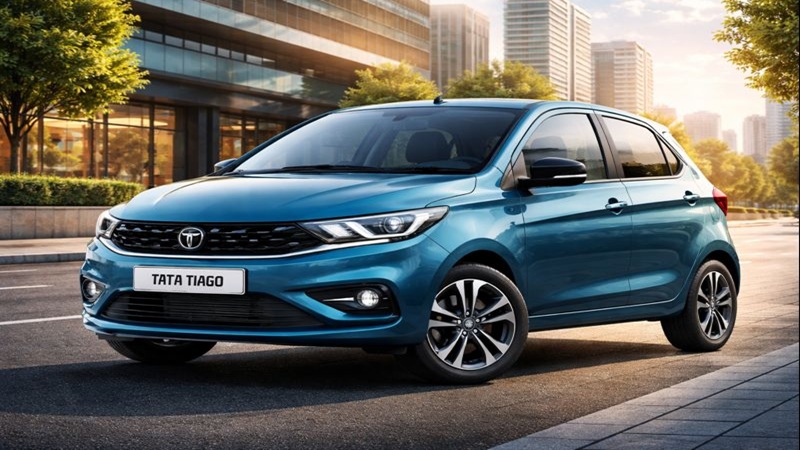
The 2025 Tata Tiago is Tata Motors’ flagship entry-level hatchback in India, known for its solid build quality, practicality, and safety. For 2025 it receives a subtle refresh with minor exterior tweaks like a sharper front grille, LED headlamps with DRLs, and a shark-fin antenna, while still keeping its compact hatchback silhouette ideal for city driving. Inside, the Tiago offers a more modern cabin with updates like a new multifunction steering wheel, a larger touchscreen infotainment system with wireless Apple CarPlay and Android Auto, TPMS (tyre-pressure monitoring), cruise control, and multiple USB charging ports — enhancing comfort and tech for drivers and passengers alike. Safety is a strong focus: the Tiago carries a 4-star Global NCAP adult safety rating with dual front airbags, ABS with EBD, ESC & hill-hold assist on higher trims, making it one of the safer cars in its class.

Under the hood, the 2025 Tiago sticks with Tata’s reliable 1.2-litre Revotron three-cylinder petrol engine, paired with either a 5-speed manual or a 5-speed AMT automatic gearbox. The petrol unit delivers around 86 PS of power and 113 Nm of torque, offering responsive performance suited for city and highway use while maintaining good fuel efficiency (around ~20 km/l in petrol form depending on variant and driving conditions). A CNG (iCNG) option is also available on many trims, improving running cost with mileage figures often above 25 km/kg, making it attractive for budget-conscious buyers. Beyond internal combustion options, Tata also offers an electric Tiago EV with battery options that provide an estimated range of around 250 km (medium range) to about 315 km (long range) on a single charge, with features like automatic climate control, cruise control, and a single-speed automatic motor setup.

In terms of variants and pricing, the 2025 Tiago range is broad to suit different needs and budgets. Petrol and CNG versions start from approximately ₹5.8 lakh on-road for base trims like XE and go up to around ₹9.8 lakh for fully-loaded CNG/AMT versions in many cities. If you’re considering the Tiago EV, its on-road prices typically range from around ₹9.1 lakh for the medium-range base variant up to about ₹12.9 lakh for top-end long-range versions. These prices make the Tiago one of the most competitively priced hatchbacks in India, especially considering the level of tech, safety, and efficiency it offers.

Across the lineup, the Tiago is presented in multiple trims — including XE, XM, XT, XZ and XZ+ — each adding progressively more features such as larger infotainment screens (up to ~10.25″), LED lights, alloy wheels, rear parking camera, automatic climate control, and additional safety gear on higher trims. With its compact dimensions, generous feature list, practical engine options (petrol, CNG, and EV), and strong safety credentials, the 2025 Tata Tiago continues to be a compelling choice for first-time car buyers, urban commuters, and anyone seeking a value-packed hatchback.

Jan 192026
 

Maruti Suzuki’s e Vitara is NEXA’s first big step into the mass-market EV space—an SUV-style electric car that’s meant to feel like a “proper Vitara” rather than a small city EV. In terms of size, Autocar lists it at 4,275mm long, 1,800mm wide, 1,640mm tall with a 2,700mm wheelbase, and it’s currently shown as arriving in early 2026 (India).

On the EV side, the official NEXA site highlights a claimed driving range of 543 km on a full charge, and even mentions you can do up to ~400 km at 80% charge (useful because fast-charging usually targets 80%). Autocar further says the e Vitara is expected with two battery options (49kWh and 61kWh, LFP) and front-mounted electric motors, with the bigger-battery versions listed with the same 192.5Nm torque figure.

Where the e Vitara really tries to “feel premium” is features and safety: NEXA calls out ADAS Level 2 with 15+ functions (like lane departure warning, adaptive cruise control, high beam assist, and emergency braking), plus 7 airbags (six + a driver knee airbag) and ESP. For comfort, NEXA also mentions ventilated front seats, rear seats that slide and recline, a panoramic fixed-glass sunroof, and multiple drive modes including Eco/Normal/Sport plus Snow mode. Charging-wise, Maruti positions it as flexible: home AC charging, fast DC charging on trips, a portable charger, and app-based help to find/reserve charging slots.

WordPress › Error

There has been a critical error on this website.

Learn more about troubleshooting WordPress.