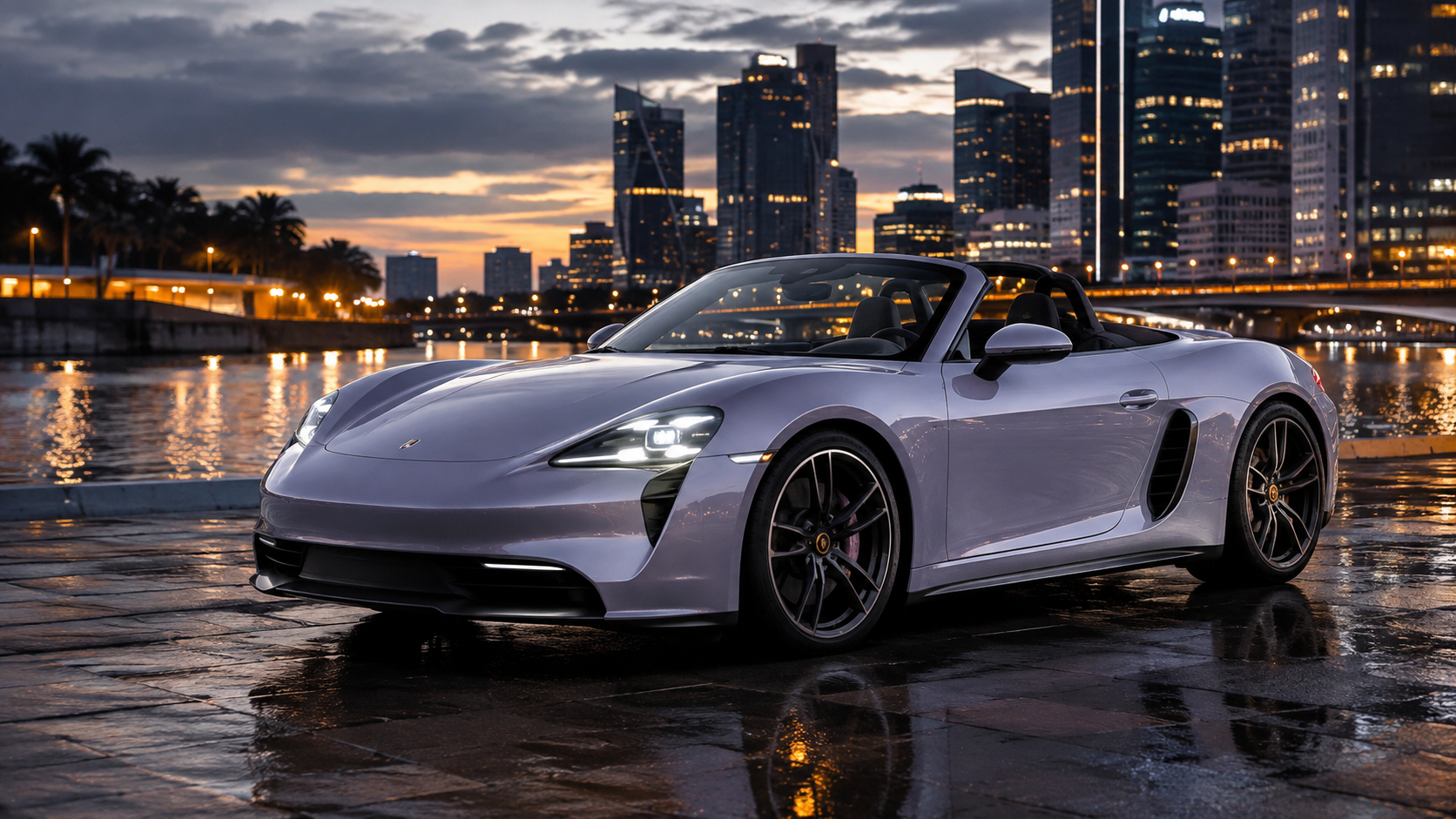
Porsche has confirmed that its long-delayed electric 718 Cayman and Boxster are still in development, despite ongoing uncertainty about the future of the entry-level sports car lineup.
CEO Michael Leiters said the electric 718 remains the preferred direction because it is “the best solution economically” and described it as a “fantastic car.”
The 718 project has shifted multiple times, with Porsche previously considering EV-only, hybrid, and even petrol options. The company now appears to be focusing on a fully electric version as the most practical path forward.
This decision comes as Volkswagen continues efforts to cut costs and streamline future models, with earlier reports suggesting a planned gas-powered 718 replacement may be cancelled.
Porsche’s EV strategy still carries risk. In 2025, only 22.2% of global sales were fully electric, while 12.1% were plug-in hybrids, showing that EV adoption is still developing for the brand.
However, Europe remains stronger, with 57.9% of Porsche sales including electrification and about one-third fully electric, supported by models like the Taycan, Macan EV, and Cayenne EV.
The petrol-powered 718 Cayman and Boxster ended production in October 2025, with 18,612 units sold that year, down 21% from the previous year.
Porsche has not shared expected sales targets for the electric 718, but the model will likely depend on performance, handling, and brand appeal rather than volume.
Competition is expected to be limited, with rivals including the Alpine A110 EV and an Audi electric sports car based on the Concept C platform.
Technical details remain unknown, including battery size, range, power output, and final design, with only prototype sightings so far.
Porsche aims to preserve the 718’s lightweight, driver-focused character, making it a key test of whether an electric sports car can match the emotional appeal of its petrol predecessor.
If successful, the electric 718 could become one of the most important EV sports cars in the market when it launches.